-
Tool Buying FAQ for B2B Admins
-
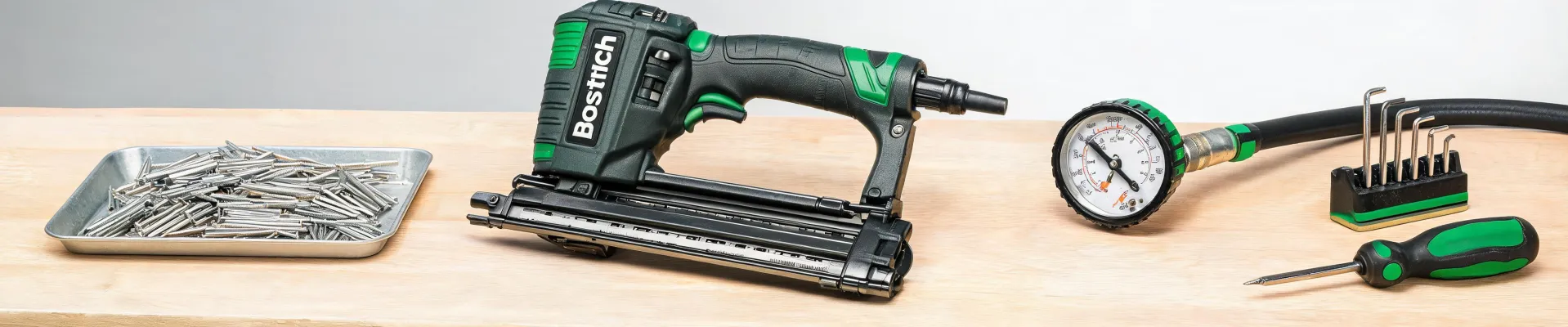
What should I check before buying a Bostitch stapler nail gun for a crew?
-
Is a Bostitch pneumatic stapler better than cordless for production work?
-
Do I really need a hammer drill vacuum attachment?
-
What size sump pump do I need—is 1/2 hp enough?
-
Is 300 nm torque good for an impact wrench?
-
How do I handle urgent tool orders without missing a deadline?
-
How do I verify Bostitch repair parts and compatibility?
-
What specs and warranty details should I confirm before approving a purchase?
-
What should I check before buying a Bostitch stapler nail gun for a crew?
Tool Buying FAQ for B2B Admins
I’m an office administrator for a 140-person construction services company. I manage tool and parts ordering—roughly $320,000 annually across 11 vendors. I report to both operations and finance. This FAQ answers the tool-buying questions I get from foremen, maintenance techs, and project managers, especially when deadlines are tight.
Short version: specs, warranty, parts availability. In that order.
- What should I check before buying a Bostitch stapler nail gun?
- Is a Bostitch pneumatic stapler better than cordless for production work?
- Do I really need a hammer drill vacuum attachment?
- What size sump pump do I need—is 1/2 hp enough?
- Is 300 nm torque good for an impact wrench?
- How do I handle urgent tool orders without missing a deadline?
- How do I verify Bostitch repair parts and compatibility?
- What specs and warranty details should I confirm before approving a purchase?
What should I check before buying a Bostitch stapler nail gun for a crew?
Look, a Bostitch stapler nail gun can be a workhorse, but the model matters less than the system around it. Check fastener type and gauge, magazine capacity, air inlet size, operating pressure, and whether the tool is designed for the material you’re fastening. For framing, sheathing, or trim, those specs change. I learned that the hard way in my first year: I assumed all 1/4-inch fittings were the same. Cost me a return and a lost afternoon. Also confirm parts availability and warranty terms. If you’re buying for multiple crews, standardize on one fastener platform where you can. That reduces training and inventory headaches. Don’t assume a generic nail gun will cover every job. Ask the supplier for the manual and a current parts diagram before you approve the PO.
Is a Bostitch pneumatic stapler better than cordless for production work?
Everything I’d read said cordless always wins. In practice, for high-volume production stapling in a shop or on a long deck run, a Bostitch pneumatic stapler was more consistent and lighter. It didn’t bog down as the battery faded. But pneumatic means you need a compressor that matches CFM at the required pressure. The old “pneumatic tools need a huge compressor” thinking comes from an era before efficient small compressors. Today, a well-matched compact unit can run some Bostitch staplers. Still, cordless is usually better for quick service calls and ladder work. The question isn’t which is better. It’s which is better for the specific task, duty cycle, and jobsite power. If you’re buying a Bostitch stapler pneumatic setup, verify CFM, not just tank size.
Do I really need a hammer drill vacuum attachment?
For overhead drilling into concrete or brick, yes—or at least your crew will want one. A hammer drill vacuum attachment captures silica dust at the bit, which matters for OSHA-style jobsite rules and for keeping finished spaces clean. It also reduces cleanup time. The catch: not every attachment fits every hammer drill. Check collar diameter, hose size, and whether the shroud works with the bit length you’re using. I bought one once without measuring the collar. It sat in the shop for six months. If you’re drilling a few holes outdoors, you might skip it. If you’re doing overhead work in occupied buildings, it’s fairly hard to justify not having one. Factor in replacement filters and hose adapters.
What size sump pump do I need—is 1/2 hp enough?
A 1/2 hp sump pump is often enough for a typical residential basement, but horsepower alone doesn’t tell you much. What matters is gallons per hour at your actual discharge height, also called total dynamic head. A deep basement, long horizontal run, or narrow discharge pipe can make a 1/2 hp pump struggle. I assumed 1/2 hp was overkill for all residential jobs. Didn’t verify. Turned out for one deep-basement property, it was barely enough during heavy rain. Check the pump curve, not just the label. Also confirm switch type, cord length, and whether the basin is clean. In commercial maintenance, buy a spare pump or at least a spare switch. When water is rising, waiting two days for shipping is not a plan.
Is 300 nm torque good for an impact wrench?
Is 300 nm torque good for an impact wrench? It depends on the fastener and application. In metric terms, 300 Nm is roughly 220 ft-lb. That is enough for many automotive lug nuts, smaller construction bolts, and general maintenance. It is probably not enough for heavy truck suspension, seized bolts, or large structural hardware. Check the torque spec of the fastener, then add margin. Also look at breakaway torque versus tightening torque; marketing often highlights one number. Per FTC advertising guidelines (ftc.gov), torque claims need to be truthful and substantiated, so ask for the test standard. A compact impact with 300 Nm might be ideal for overhead work where weight matters. A high-torque corded or pneumatic model might be better for the shop. Match the tool to the job.
How do I handle urgent tool orders without missing a deadline?
This is where I stopped chasing the lowest quote. In March 2024, we paid $180 extra for guaranteed two-day delivery on a replacement Bostitch pneumatic stapler. The alternative was missing a $9,000 deck inspection deadline. The rush fee bought certainty, not just speed. After getting burned twice by “probably on time” promises, we now budget for guaranteed delivery on deadline-critical orders. Here’s the thing: an unreliable cheap supplier is more expensive than a reliable one with a higher unit price. Ask for a tracking number, a committed ship date, and a named account contact. If the tool is for a repair, confirm the part fits before you pay for expedited shipping. Speed does not fix a wrong part. For planned work, order early and avoid the premium. For emergencies, pay for certainty.
How do I verify Bostitch repair parts and compatibility?
Start with the model number, not the brand name alone. Bostitch has many nailers, staplers, and compressors, and parts are not universal. Get the parts diagram for your exact model and serial range. Check o-rings, drivers, bumpers, triggers, and magazine springs. If you are buying a replacement piston or driver, confirm the length and coating. I once assumed two Bostitch staplers from the same series used the same driver. They didn’t. Cost us a week. For warranty work, use authorized channels if the tool is still covered. For older tools, aftermarket parts can work, but verify dimensions and material. Do not rely on a photo alone. A supplier who can send a diagram and a spec sheet is usually worth a few extra dollars. Keep a small parts kit for your most-used tools.
What specs and warranty details should I confirm before approving a purchase?
Build a short checklist: voltage or air requirements, torque or power rating, capacity, weight, dimensions, warranty length, and return window. For air tools, confirm CFM at the required PSI. For cordless, confirm battery platform and whether batteries are included. For a hammer drill vacuum attachment, confirm collar and hose compatibility. For a 1/2 hp sump pump, confirm discharge size and switch type. Ask whether the warranty covers normal jobsite use or only homeowner use. That distinction matters for B2B buyers. Get the return policy in writing. I only believed the “check the warranty exclusions” advice after ignoring it and eating an $800 repair. Now I file the manual and receipt in the same folder. Approvals go faster when finance can see the paper trail.

Leave a Reply