"Do I Need a Nail Gun for Trim?" There's No Single Answer — Here's How I'd Decide
I've spent over four years reviewing hardware tool samples before they get anywhere near a customer. Around 200 unique items a year. I reject maybe 8% of first deliveries—most of those are coating inconsistencies, a spec that's 0.3mm off, or a label that doesn't match the certificate. Small stuff, but enough to trigger a return. So I've learned to stop asking "what's the best tool" and start asking "what's the job."
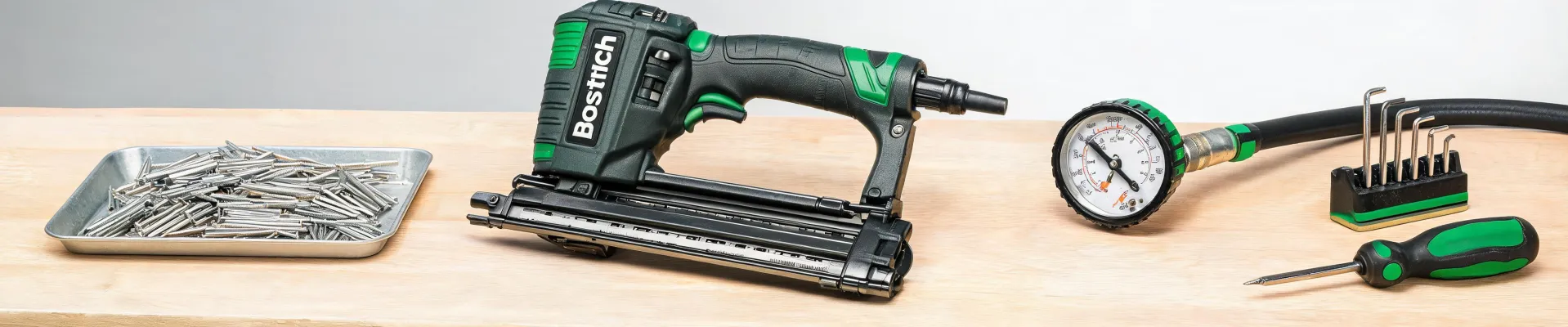
The same logic applies to whether you actually need a Bostitch nail gun for trim work. I break it into four scenarios. Your answer is somewhere in there.
Scenario 1: You're a Homeowner Doing One or Two Rooms
You probably don't need a nail gun. I know that's not what a tool brand usually says. But here's the thing—if you're trimming out a single door or running baseboard in one bedroom, a hammer and finish nails will get you there.
What you actually want is a decent pair of locking pliers and a nail set. If you're going to buy pliers for trim work specifically, get locking ones—they double as a clamp when the miters won't stay tight. A tube of construction adhesive helps too. Total cost: under $60.
I've seen this play out badly. A buddy bought a Bostitch cordless finish nailer for a single bathroom renovation. Eighteen months later, the battery was dead and the tool hadn't been touched since. The maintenance cost of owning a pneumatic system—draining the tank, oiling the gun, replacing O-rings—doesn't make sense at that volume.
So if you're in this category: skip the nail gun. Buy pliers, a nail set, and good adhesive. Put the savings toward a decent miter saw.
Scenario 2: You're a Woodworker Running Multiple Projects a Month
Now it starts to make sense. If you're building cabinets, window casings, or furniture on a weekly basis, a dedicated trim nailer earns its keep fast.
This is where the cordless vs. pneumatic decision actually matters. The Bostitch cordless finish nailer shines when you're working in places that aren't near an outlet—or an air hose. No drag, no trip hazard, no compressor cycling in the background while you're trying to hear a miter saw.
But I'll be straight with you: battery weight is real. I've held one for an afternoon. After a few hundred nails, you feel it. The pneumatic version is lighter because the power source isn't strapped to your hand. That's just physics.
If you already own batteries in that platform, cordless is a no-brainer. If you don't, factor in the cost of batteries and a charger. That can double the entry price.
Scenario 3: You're a Professional Trim Carpenter Running Jobs Daily
This is where pneumatic still wins. You're driving hundreds—sometimes thousands—of nails a day. You need consistent depth, a light trigger pull, and a tool that doesn't need a nap after 400 shots.
Now you're looking at the whole system. The air compressor cast iron series—like Bostitch's—is built for this kind of abuse. Cast iron cylinders handle heat and continuous duty better than aluminum. It's heavier, sure. But on a truck, that weight doesn't matter. On a second-floor job with no elevator? You'll feel every pound.
I've seen trim crews keep the Bostitch F28WW on the truck for heavier fastening tasks alongside their cordless finish nailer. Different tools for different stages. The F28WW isn't replacing the trim gun—it's complementing it.
One thing I'd say from reviewing warranty data: compressor maintenance is where most people slip. Drain the tank after every use. Check the oil. Replace the filter. If you skip that, you'll be buying a new compressor in 18 months instead of 8 years.
Scenario 4: You're Running a Shop With Consistent Production
In a shop environment, the equation shifts again. You've got space, you've got power, and you've got volume. Pneumatic is the default here. The air compressor cast iron series makes even more sense because it's running all day.
But even here, not every trim task needs a nail gun. Some assemblies are faster with jigs and clamps. I've seen shops burn money buying tools they didn't need because "the pros use them." Look at the operation, not the tool catalog.
How to Figure Out Which Scenario You're In
Here's a quick check. Answer honestly—no aspirational answers.
- How many trim projects did you do last year? One or two? Skip the nail gun. One a month or more? Keep reading.
- Do you already own an air compressor? If yes, adding a pneumatic nailer is cheap. If no, factor in the full system cost.
- Do your job sites have reliable power? If not, cordless is more practical. If yes, pneumatic gives you more consistency.
- Are you already invested in a battery platform? If yes, cordless is a natural fit. If no, that's a significant extra cost.
- How many nails per week are you driving? Hundreds? Pneumatic. Dozens? Manual tools and adhesive are still fine.
If you're still not sure, start with the pliers and a nail set. Upgrade when you actually hit a bottleneck. Tools should solve problems you have, not problems you might have.
And one last thing: whatever you buy, check the repair and parts support before you commit. Tools break. Being able to fix them is worth more than a spec sheet promise of "never breaks."
This assessment is based on tool review experience through 2025. Product specs and pricing shift fast—verify current details before you buy.

Leave a Reply