-
Backstory: The Contract That Exposed Our Tool Gaps
-
What Do You Use a Nail Gun For? The Question Behind the Purchase
-
Choosing the System, Not Just a Bostitch Coil Nail Gun
-
Then the Bostitch 6 Gallon Air Compressor Problems Started
-
Router Bits and an Oil Filter Strap Wrench: The Supporting Costs
-
What I’d Tell Another Small Shop
Backstory: The Contract That Exposed Our Tool Gaps
In spring 2025, our four-person millwork shop accepted a commercial build-out for a brewery taproom. The job sounded straightforward: custom bar, floating shelves, board-and-batten walls, tongue-and-groove ceiling. It also exposed a gap in our tool room.
We didn’t own an air compressor. We didn’t own a nail gun. For years, we rented a stapler when we needed it or used screws with plug cutters, which made trim work slower than it should have been.
I manage our tool budget, so I already knew what that gap was costing us. In six years of tracking supplies, I’ve seen small operations pay more in rental fees than a decent compressor would have cost. Still, I didn’t want to blow the budget just because a project deadline was pushing us.
What Do You Use a Nail Gun For? The Question Behind the Purchase
My first search one night was embarrassingly basic: “what do you use a nail gun for?”
In our case, the answer was plenty. We needed to hold tongue-and-groove boards while adhesive cured, attach battens without drilling every 16 inches, and trim out doorways without splitting thin casing. Screws would have worked, but not efficiently. Nails let one carpenter do the work of two.
That reframed everything. I wasn’t buying a flashy gadget. I was buying hours back on a job with a hard deadline.
Choosing the System, Not Just a Bostitch Coil Nail Gun
Our job required a compressor that could ride in a truck and still run a trim nailer without cycling constantly. I also needed a coil nail gun that could handle cedar and engineered panels without jamming every third row.
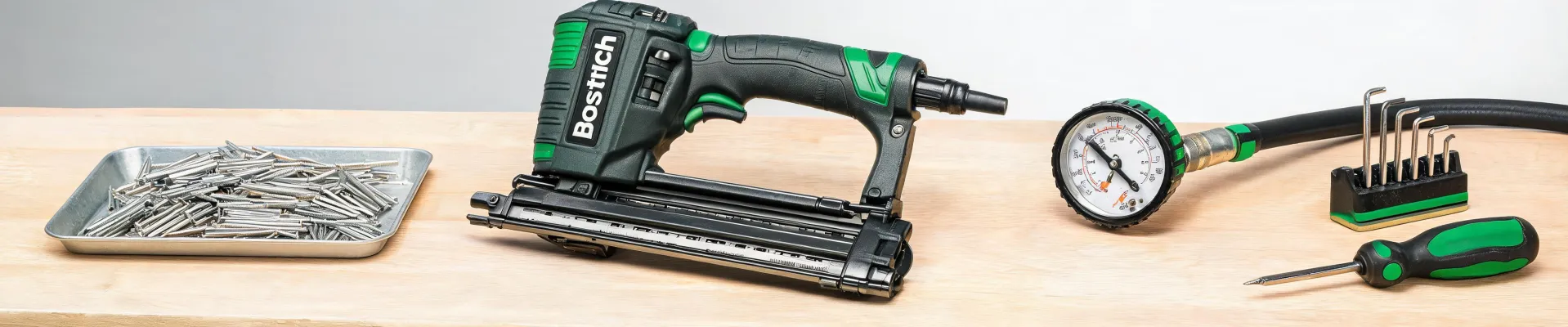
I kept returning to the Bostitch coil nail gun, mostly because the service documentation was easy to find. That sounds minor, but replacement parts and exploded diagrams matter more on a job site than a logo sticker. I matched it with a Bostitch 6 gallon, 150 psi pancake compressor. The pair wasn’t the most exciting purchase I’ve ever made, but it made sense.
Then the Bostitch 6 Gallon Air Compressor Problems Started
A week later, one of the crew called me over. The compressor was humming, kicking on, shutting off, then refusing to restart for several minutes. On the next restart, it sounded like it was working through syrup.
I typed “Bostitch 6 gallon air compressor problems” into a search bar and found plenty of other owners with similar symptoms. The common thread I saw was often a check valve issue or a pressure switch that wasn’t releasing properly. But diagnosing from forum threads is one thing; getting the right part is another.
So I called Bostitch support, expecting to be treated like a tiny account with no leverage. I was wrong. The agent asked for the serial number, sent me the exploded view, and confirmed the check valve part number. There was no attempt to up-sell me a new compressor. There was no “this is too small for us to deal with” tone.
The part arrived two days later. Note to self: check the simple stuff before assuming the whole compressor is dead.
Router Bits and an Oil Filter Strap Wrench: The Supporting Costs
While the part was shipping, we moved to the bar-top build. The drawings specified a rounded decorative edge on the serving counter and a beaded profile on the shelf fronts. I could have shaped those by hand, but the labor cost would have been brutal. I ordered a decorative edge router bit set 91003 because it included the bearing-guided profiles we needed.
The set paid for itself in one afternoon. The bearing let us follow the template without burning the wood, and there was almost no sanding before finish.
By the end of the same week, the work truck needed an oil change before an install run. Taking it to a shop meant losing two hours of crew time, so I bought an oil filter strap wrench and did it in the parking lot. It wasn’t a glamorous purchase, but keeping the truck rolling was part of the same total-cost equation as keeping the compressor rolling.
What I’d Tell Another Small Shop
I still kick myself for not putting a maintenance checklist on the compressor sooner. We had no routine for draining water or releasing pressure, and that inattention is probably what turned a small issue into a shutdown.
But here’s the part I didn’t expect: the repair support made me feel like our small order mattered. Not because someone sent a discount code, but because the problem was treated as a fixable maintenance issue instead of an excuse to sell us a replacement. That is the real differentiator when a tool budget is tight.
Bottom line: If you’re equipping a small shop, don’t buy based only on the price of the tool. Consider the price of the repair parts, the quality of the diagrams, and the patience of the support line. The best tool purchase is the one that can be fixed before your deadline falls apart.

Leave a Reply